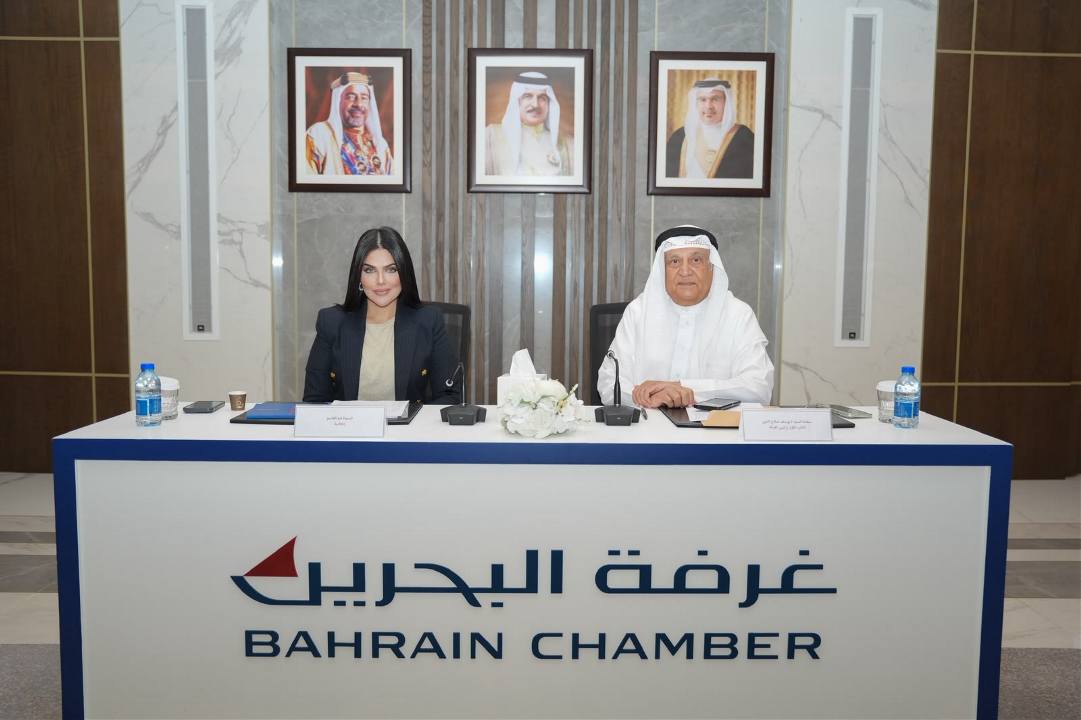
Salahuddin said the reign of His Highness Isa Al Kabeer, Ruler of Bahrain, and its Dependencies, marked a pivotal stage in organizing commercial activity and establishing stability. His wisdom, consultative approach and commitment to justice and coexistence helped create an environment conducive to economic activity, strengthen trust across society and expand trade relations.
Salahuddin traced Bahrain’s trading heritage to Dilmun and described pearling as an integrated economic and social system supporting maritime industries, crafts, finance and trade. He also highlighted the role of traditional markets and harbours in connecting local businesses with overseas markets, alongside early commercial dispute resolution practices that paved the way for institutional development.
He identified the discovery of oil in 1932 as a turning point that created industries, skills and business opportunities. The subsequent development of ports and aviation further strengthened Bahrain’s trade and logistics capabilities.
Salahuddin also reviewed the Chamber’s evolution, from the Merchants’ Council in 1910 and the Bahrain General Merchants’ Association in 1939 to the adoption of its current name in 1967.
He highlighted Bahrain’s continued diversification into financial services, industry, tourism, telecommunications and logistics under the leadership of His Majesty King Hamad bin Isa Al Khalifa, supported by the Government led by His Royal Highness Prince Salman bin Hamad Al Khalifa, the Crown Prince and Prime Minister.
He concluded by calling for greater productivity, exports, partnerships and digital adoption, while preserving Bahrain’s economic and cultural heritage to support tourism and strengthen national identity.